When Herbert Asbury’s Gangs of New York left readers with Thomas “Humpty” Jackson, the hunchback gangster was composting like a rotten potato in a prison cell upstate.
But what Asbury never told readers was that Humpty, a hoodlum known for packing a revolver in his hat and a copy of Voltaire in his pocket, spent his three year stretch reading every book he could get his thieving paws on. Stevenson, Huxley, Darwin, Herbert Spencer, and Thomas Paine, Humpty devoured every volume in the Sing Sing library, and when he got out; the Hump went straight.
Surrounding himself with books, pigeons, and toy poodles, Jackson eventually opened a pet shop on 125th Street where the mug dispensed a blend of streetwise philosophy and classical learning to anyone who would listen. Soon, newspapers from around the country came to sop up Humpty’s wisdom on diverse subjects such as: love, prohibition, capital punishment, and the secrets of life. These are his greatest hits:
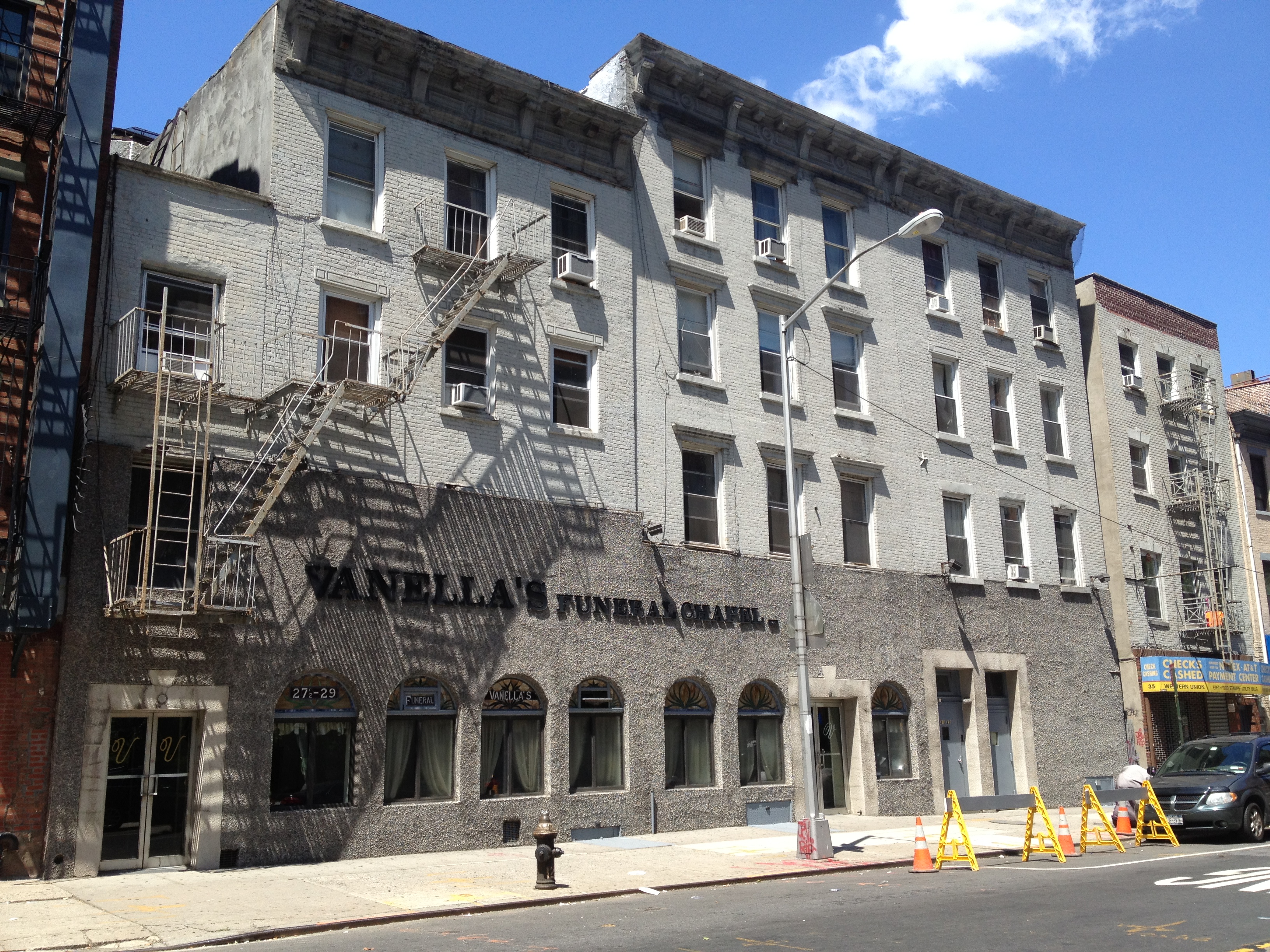
Reformed gangster and member of Johnny Torrio’s first gang, Roxie Vanella opened this funeral parlor at 29 Madison Street.
Location: 29 Madison Street: Vanella’s Funeral Chapel
Status: Standing
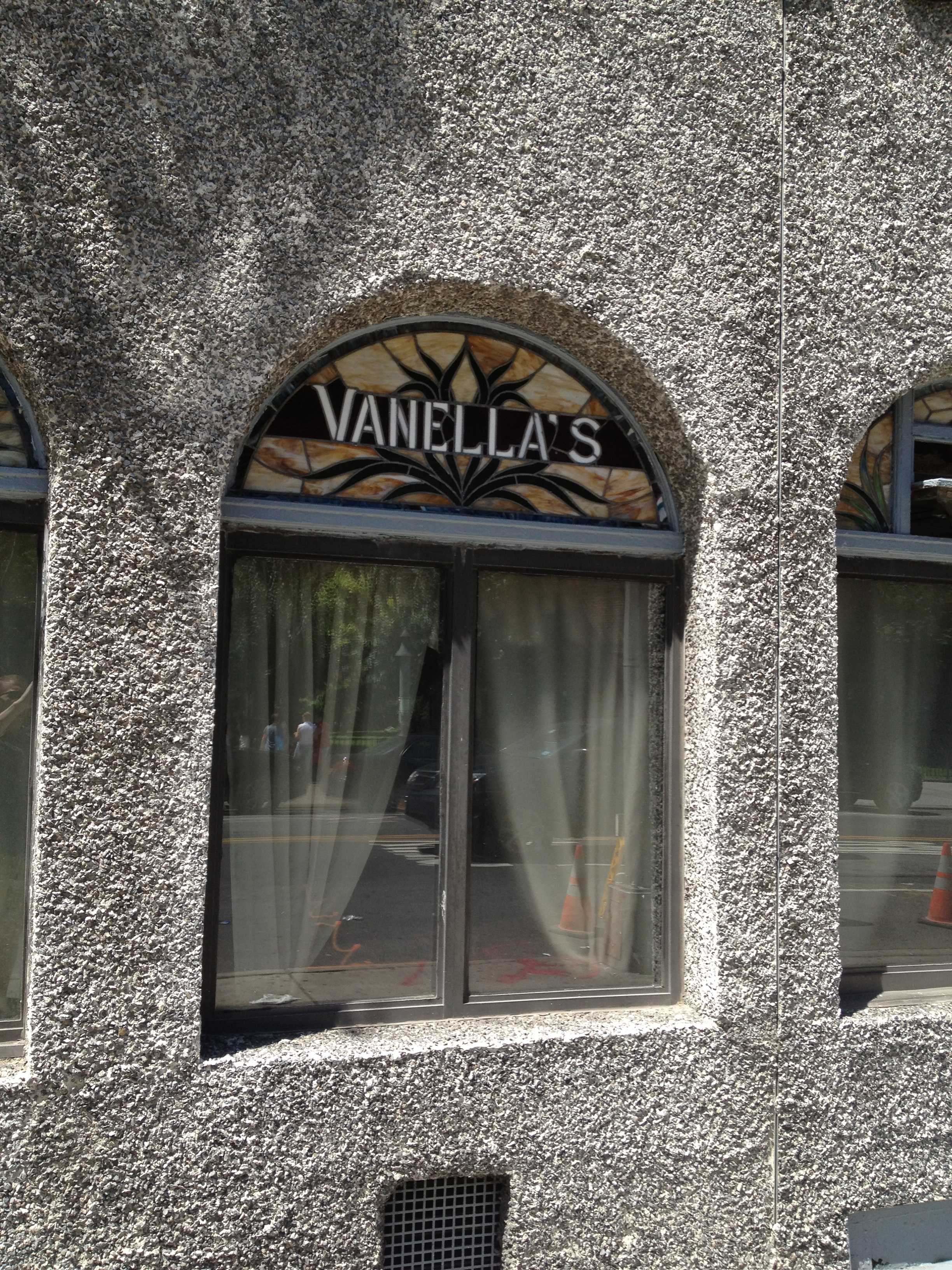
He was the King of the Ragpickers and the Mayor of James Street. He knew judges and congressmen, and was a personal friend of Johnny Torrio, Al Capone, and Presidential Candidate Alfred E. Smith. His name was Robert “Roxie” Vanella, an ex-gangster turned prohibition-era undertaker who was the namesake of Vanella’s Funeral Chapel located at 29 Madison Street in one of the last-vestiges of the old Corlears Hook neighborhood.
A Young Man, Willing to Do Anything:
Born and raised in a district ruled by river pirates and street walkers, Vanella was born in a bleak tenement at 68 James Street, giving him virtually no other options but a life of crime. In 1899, the sixteen year old Vanella proved his desperation by posting a classified ad in the New York Herald, which stated:
The ad was a surprisingly accurate resume, and Vanella went on to prove that he was in fact, “Willing to do anything.”
Johnny Torrio and The James Street Gang
He became best friends with Johnny Torrio, whose stepfather ran an illegal moonshine still across the street from Vanella’s home, and together they founded The James Street Gang, an East River auxiliary for Paul Kelly’s Five Pointers.
By 1907, the duo had parted company. Torrio relocated to Brooklyn, while Vanella moved to Montana, a strange place for an Italian from New York to say the least. While he was in the Big Sky State, Vanella’s traveling companion suddenly died of an acute gunshot wound to the head. Vanella claimed it was suicide and the cops claimed it was murder. The jury believed the cops, and they slapped Vanella with life in prison.
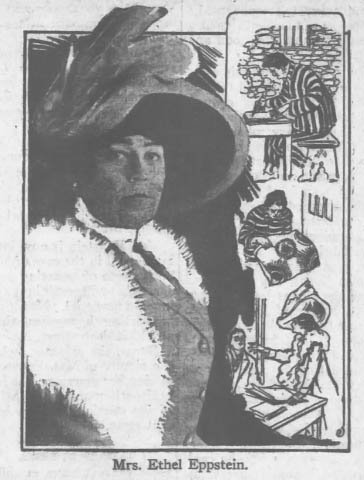
Ethel Eppstein would help Vanella win his freedom from a Montana Prison
After serving seven years in the Deer Lodge Penitentiary, Ethel Eppstein, a socialite prison reformer investigated Vanella’s case and found that he had been convicted on circumstantial evidence. In 1914, the state granted a re-trial and the New York gangster walked out a free man.
Johnny Torrio and Roxie Vanella: Together Again
After beating a life sentence, Roxie headed straight for Chicago where his old pal, Johnny Torrio, had become a big thing, managing Big Jim Colosimo’s brothel empire in the Levee District.It didn’t take long for the slugs to start flying.
Roxie and Torrio kicked off a shootout that left a policeman dead and Vannella wounded, but once again, Roxy beat the charges. However, after dodging two life sentences in a seven year period, the gangster smartened up and went straight. Click to read the newspaper story on Vanella.
Once again proving that he was willing to do anything, he returned to James Street where he joined the staff of Tammany Hall’s Big Tom Foley, was elected President of the Ragpickers Union, and opened Vanella’s funeral chapel where he made it big burying the casualties of the roaring twenties.
Vanella’s Funeral Chapel located at 29 Madison Street.
Torrio never forgot Roxie. When the Mayor of James Street wed in 1921, the New York Tribune reported:
John Torrio, the best man, well known in Chicago politics, came in a special [train] car, bringing a party of fifty with him.
One can only imagine the identities of Torrio’s fifty associates. Click to read the full story of Vanella’s wedding.
If anyone else has any info on Vanella, I’d love to hear it.
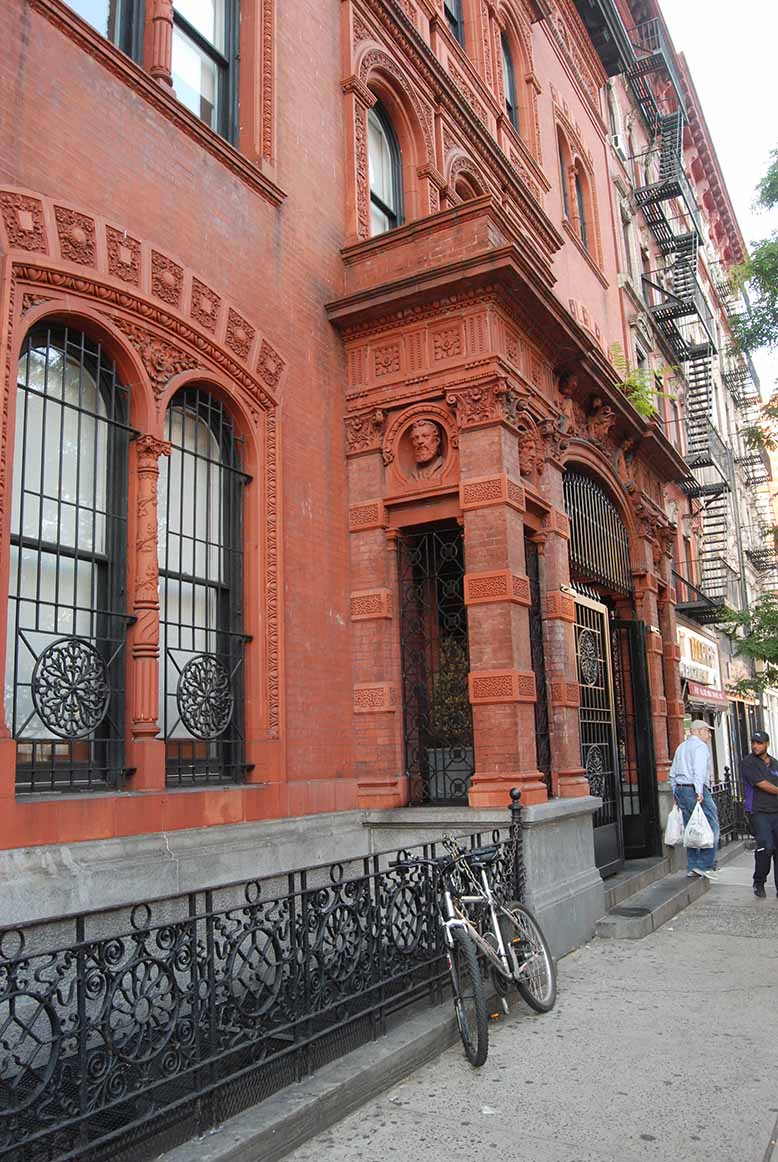
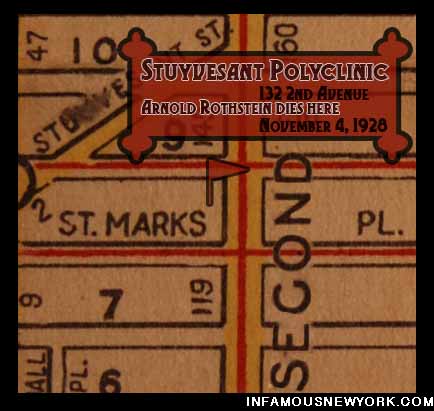
As he lay dying in a private three-room suite in the Stuyvesant Polyclinic, Arnold Rothstein, the Brain of Broadway, financier of the underworld, writhed in his hospital bed and groaned in delirium as police detectives peppered him with questions.
“Who shot you,” they asked and Rothstein snarled:
My mother. You stick to your trade and I’ll stick to mine.
A team of five surgeons led by Dr. E.I. Kellog dug the .38 caliber slug from his stomach, and Rothstein’s estranged, law abiding, family drew around the mortally wounded gangster, and waited with the rest of the world. Broadway ground to a standstill. Would Arnold Rothstein finally name names?
Rothstein’s Family
With his ex-wife on her knees sobbing and his father Abe “the Just,” a deeply religious, millionaire philanthropist towering over his son’s clammy, feverish body, the family drew together in prayer.
After a blood transfusion, house Dr. Alexander O’Hare pressed a stethoscope to Rothstein’s chest and pronounced alleged fixer of the 1918 World Series dead at 10:17AM, November 6, 1928, and hoodlums of Broadway went wild.
A historic plaque on the landmarked polyclinic today.
In the words of the Brooklyn Eagle:
“Rothstein did not keep documents which might tend to incriminate himself. But he kept documents which would tend to incriminate others.”
The Big Bankroll Arnold Rothstein
There wasn’t a man of any importance who hadn’t borrowed money from the Big Bankroll. Lucky Luciano, Legs Diamond, Dutch Shultz, NYC Mayor Jimmy Walker, and Frank Costello all had been aided by Rothstein on their crawl to the top, and the vultures raided Rothstein’s posh 5th Avenue apartment and looted his financial documents, stealing the files for the letters C, B, G, M, Mc, and T.
Rothstein would die of a gunshot wound in the Stuyvesant Polyclinic, 135 2nd Ave.
The police confiscated the remaining 56,000 pieces of paper left behind in two steel filing cabinets, and began sorting through the avalanche of incriminating papers that would lead to a seizure of two million dollars worth of dope the next day.
Some of the scraps left behind would provide fragmentary evidence that Rothstein had loaned Judge Joseph Force Crater, Tammany Head James Curry, and Mayor Jimmy Walker money.
Fiorello LaGuardia Investigates
Nearly a year later, Fiorello LaGuardia would also discover that City Magistrate Albert Vitale had repaid Rothstein a Loan for over $19,000. Lottie Pickford, the sister of famous actress Marry Pickford, also appeared in the documents. The names of Bobbie Winthrop, Dorothy King and Louise Lawson, a trio of dead showgirls used as narcotics smugglers, were also unearthed.
An international manhunt for Rothstein’s killers would ensue, resulting in the gangland trial of the century, but George “Hump” McManus, Rothstein’s probable killer, would walk free, and the murder remains unsolved.
With Rothstein dead, the twenties roared a little less loudly.
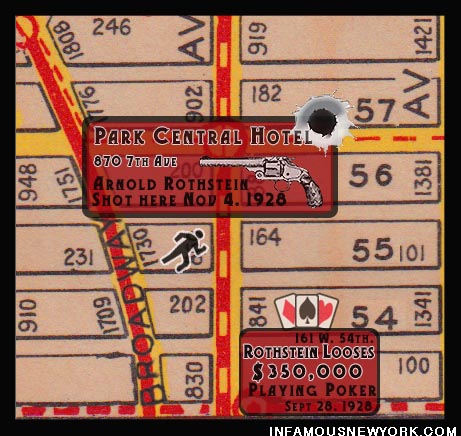
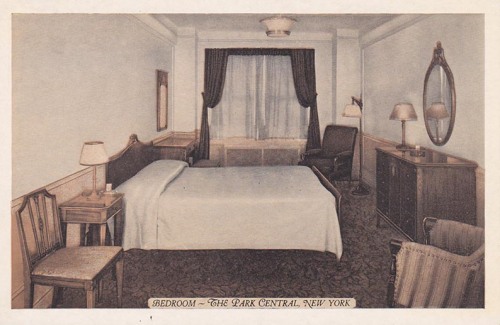
Doubled over with blood trickling down his leg and his hand pressed over his bloodied groin, Arnold Rothstein, kingpin of the New York underworld made famous again by Boardwalk Empire, groped his way through the carpeted hallways of the Park Central Hotel before collapsing in front of the service entrance.
Arnold Rothstein The Brain of Broadway
Known variously as the Brain of Broadway, the Wolf and the Big Bankroll, Rothstein was the grease that made Broadway go. A tight lipped introvert who loved silence as much as he loved his bankroll, a two inch thick stack of hundreds, Rothstein was a pool shark, a card shark, a bootlegger and a multi-millionaire who mentored a legion of hoodlums, like Frank Costello, Lucky Luciano, Meyer Lansky, and Legs Diamond.
Gangsters called multi-millionaire Arnold Rothstein the Brain of Broadway for his sharp-calculating mind.
The Wolf produced Broadway shows and owned hotels and drove a Rolls Royce, but now he was nothing more than another sucker bleeding to death on 55th Street with a .38 caliber slug drilled through his crotch. The New York Times would call it “the Crime of The Century.”
As the ambulance rushed Rothstein to the Stuyvesant Polyclinic, the police began ticking through the list of suspects and quickly realized; the real question was who didn’t want Arnold dead.
The Mother of All Card Games: Rothstein’s Bad Day
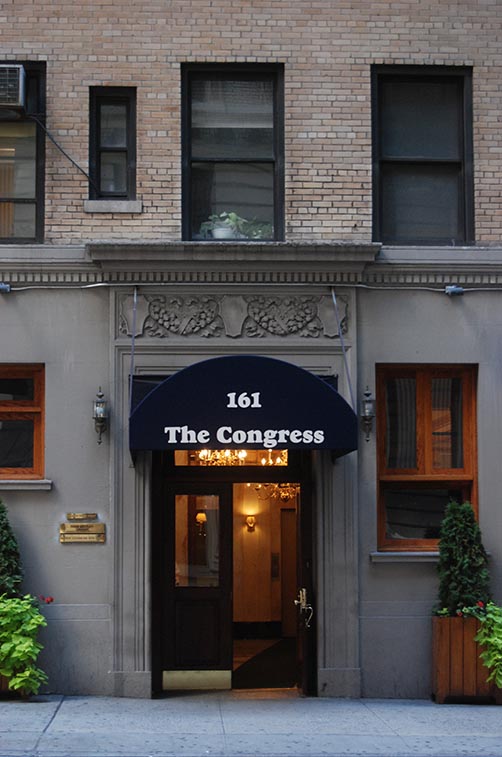
The Brain’s troubles started on September 27th at a floating five card stud game hosted at 161 West 54th Street in Jimmie Meehan’s home in the Congress Apartments. The $500 anty high-stakes game was organized by George “Hump” McManus, a mobbed-up goon, with one brother in the clergy and another on the force. But unfortunately for Rothstein, the fix was in.
Armold Rothstein was shot at the Park Central Hotel after failing to repay card debts for a poker game at 161 West 54th Street.
Golf hustling and poker playing legend, Titanic Thompson had setup the game and was planning to take Rothstein for a ride. The play was fast and furious. 13 hours later the Brain of Broadway emerged from 161 West 54th bleary eyed and $350,000 dollars poorer.
He had no intention of paying his I.O.Us. As far as he was concerned, he had been swindled.
The thirteen-hour five card stud game that broke the Big Bankroll was held here at the Congress Apartments, 161 West 54th Street.
And How Rothstein Squawked
According to the game’s host, Jimmy Meehan:
He was not a good looser. He always wanted to win…he would clean up a million or maybe two million and say goodnight boys and blow. But, oh boy, when they took him over the jumps, how he squawked.
As the game’s organizer, McManus was responsible for the payment of the dough. After a month non-payment, the Hump holed up in room 349 of the Park Central Hotel with a small posse of gorillas.
He phoned Lindy’s Delicatessen, Rothstein’s official headquarters, demanding that the Brain come to the hotel at once. Damon Runyon reportedly overheard Rothstein bark:
McManus wants me over at the Park Central. This won’t take long.
The Hump’s Revenge
It would be impossible to know what really happened in room 349 that night, but a gun went off blowing a hole through Rothstein’s spleen and bladder. The Hump split town, and New Yorkers would wake up to the Crime of the Century.
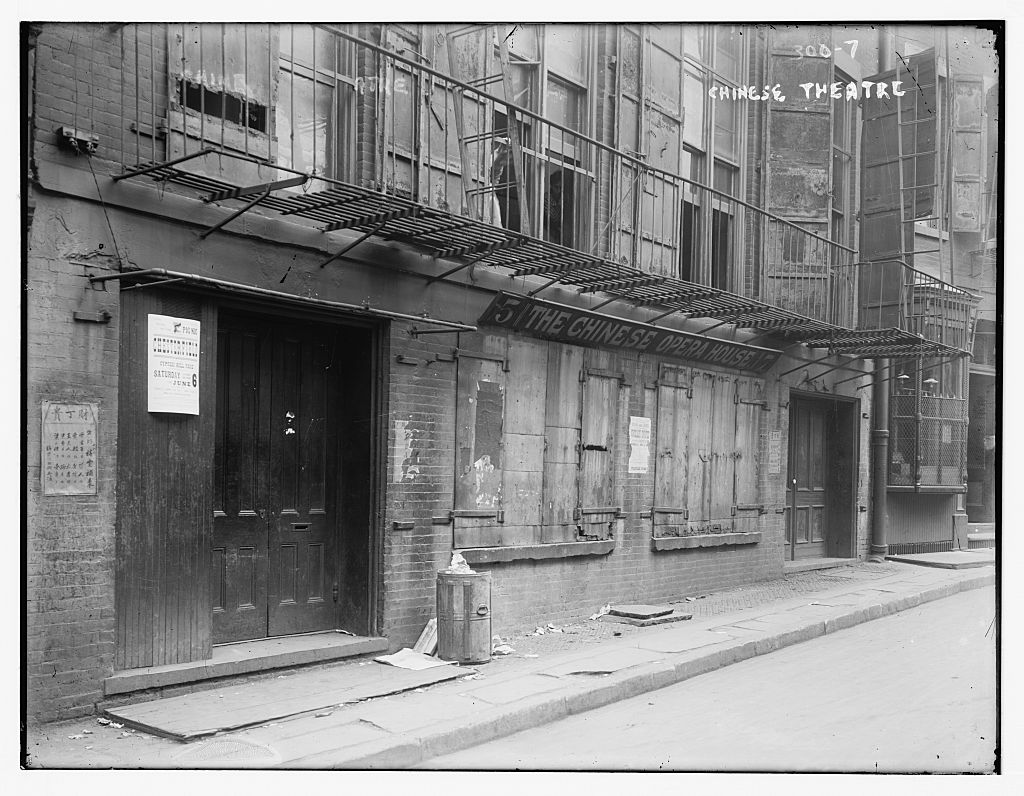
Not so much as the faintest outline of a smile crossed the lips of the stone faced killers of the Hip Sing Tong as they strutted through the fog of cigarette smoke clogging the aisles of the old Chinese Theater.
Reverberating gongs and humming Chinese fiddles cut through the gasping audience who had no idea that they were about to become part of a massacre in the unlikeliest of places. The Chinese Theater was one of the few neutral territories in New York’s Chinatown and according to the New York Sun:
…the Chinese Theater has been neutral ground, and no matter how many fights and gunplays…it was always safe for all Tong men to go to the theater and burry the hatchet while watching the show. (Click here to read the article)
The Chinese Theater was the site of an On Leong Massacre.
Flash and Fire
Suddenly, a Hip Sing gunman pressed the glowing end of a cigarette to a fuse attached to a thick rope of firecrackers. White smoke and sparks hissed from the fuse, as the hatchet-man hurled the detonating explosives into the crowd.
The crackling blasts were a signal for the Hip Sing gunmen to open fire. Pulling revolvers from their brown cloaks, the boo how doy, or Tong hitmen, started pumping bullets into the designated seating area of the rival On Leon Tong.
Bullets ripped through the On Leongs. Blood splashed the elaborate Chinese murals on the walls, and by the time Patrolman John Young entered the empty, burning theater, Lee Yuck, Yu Yuck, Ong Smg, and We Yu Sing, all members of the On Leong Tong, were dead.
The Chinese Theater on Doyers Street remained neutral ground in the Tong Wars until the Hip Sings attacked the rival On Leongs on August 7th, 1905.
The Scientific Killer
Mock Duck, the leader of the Hip Sings, placed himself in a police precinct at the time of the shooting for an unusual alibi.
The Chinese Theater Massacre was the work of Sing “The Scientific Killer” Dock, a veteran Tong-warrior imported from the Wild West by Hip Sing headman, Mock Duck to engineer the massacre on August 7th of 1905.
Realizing that Mock Duck would be fingered for the crime, the Tong leader set up the perfect alibi. According to Newspaper reporter Bruce Grant and former Tong headman Eddie Eng Ying Gong’s book Tong War!:
The first person the police thought of as responsible for this wholesale shooting was Mock Duck… They found him at the police station, arguing with the precinct Captain for locking up some men found gambling in his store… [and] The Captain had to admit that Mock Duck was there when the shooting was reported…
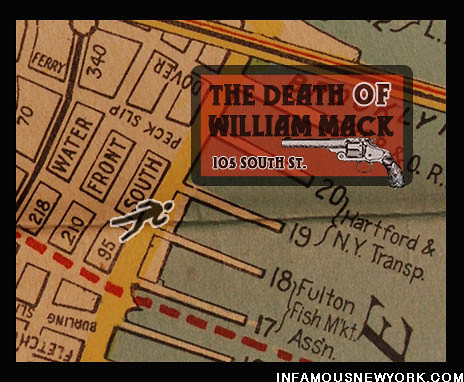
On the morning of May 19, 1926, Police investigators stumbled upon the bullet riddled body of William Mack, a labor organizer, sprawled out in a bloody heap in front of the United Seafood Workers Union headquarters. To anyone who knew anything about the Fulton Fish Market, the murder was the clearly the handiwork of New York City Mobster Joe Socks Lanza.
Joseph “Socks” Lanza, overlord of the Fulton Fishmarket, was nicknamed for the knockout power of his two ham sized fists.
The rub-out of Mack was yet another slaying in a minor war waged by the Irish mob to wrest the Fulton Fish Market from the Mafia’s slimy tentacles. No angel himself, Mack’s record included arrests for assault, burglary, and carrying a pistol, but it seemed that the Irish hoodlum’s luck ran out when he tangled with Lanza.
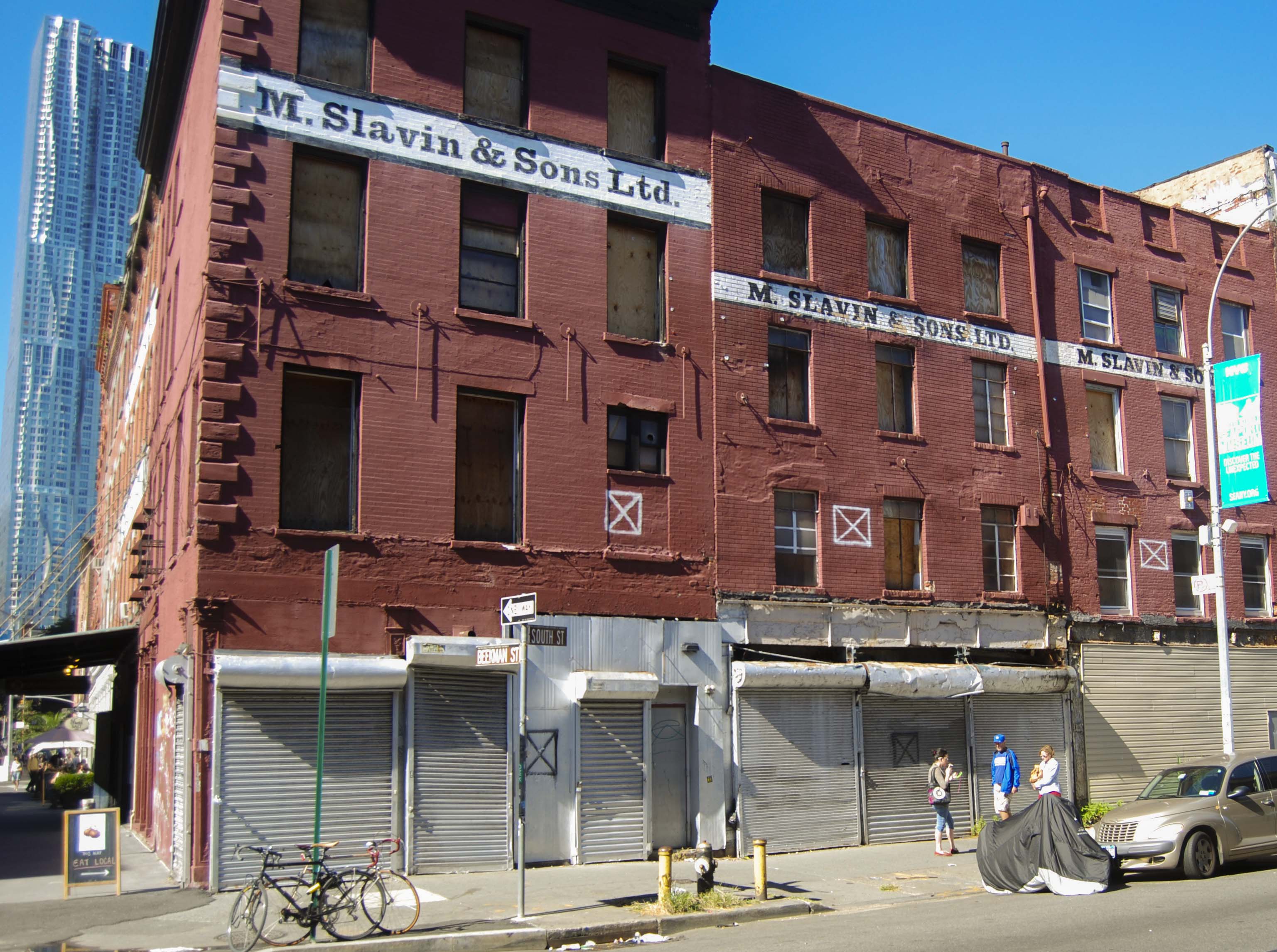
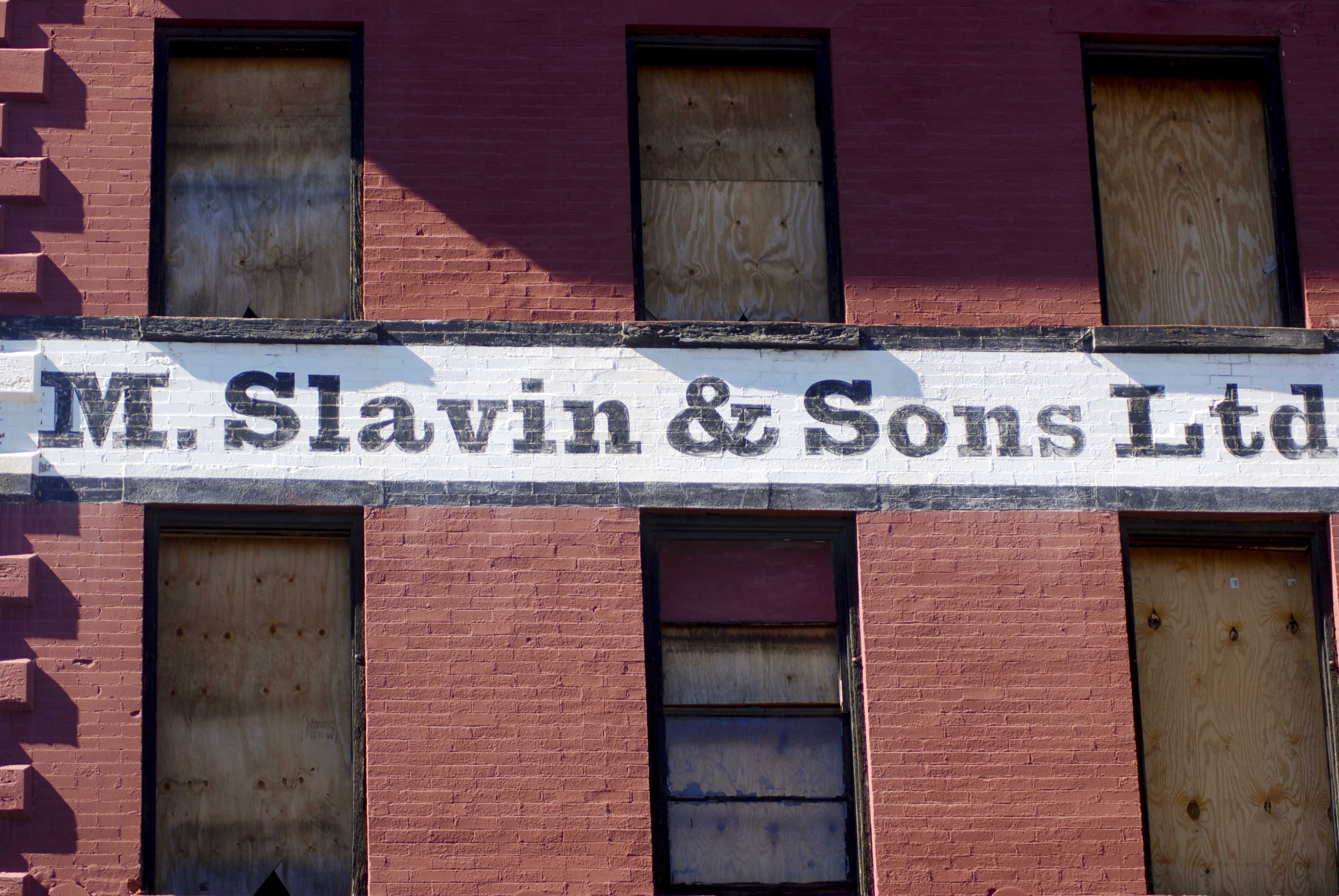
Following a trail of blood, Sergeant John Armstrong traced the body back to a speakeasy on the second floor of 105 South Street (M Slavin and Sons) where the Sergeant discovered a blood splattered bar and a lone bullet hole blasted through a wall. Lanza and three of his associates were tried for the crime, but as usual, the charges failed to cling to the slippery fish boss who went on to make headlines fighting Nazis with the Mafia in WWII.
When Herbert Asbury’s Gangs of New York left readers with Thomas “Humpty” Jackson, the hunchback gangster was composting like a rotten potato in a prison cell upstate.
But what Asbury never told readers was that Humpty, a hoodlum known for packing a revolver in his hat and a copy of Voltaire in his pocket, spent his three year stretch reading every book he could get his thieving paws on. Stevenson, Huxley, Darwin, Herbert Spencer, and Thomas Paine, Humpty devoured every volume in the Sing Sing library, and when he got out; the Hump went straight.
Surrounding himself with books, pigeons, and toy poodles, Jackson eventually opened a pet shop on 125th Street where the mug dispensed a blend of streetwise philosophy and classical learning to anyone who would listen. Soon, newspapers from around the country came to sop up Humpty’s wisdom on diverse subjects such as: love, prohibition, capital punishment, and the secrets of life. These are his greatest hits:
Nestled among the steaming chop suey joints and smoldering opium dens of turn of the last century Chinatown, there was a dingy saloon that spilled ragtime piano into the moonlight.
On any given night, the bar played host to a packed crowd of millionaires and murders, pickpockets and tourists, all on account of The Professor on the piano and a seventeen year old singing waiter named Izzy Baline, who would one day be known as Irving Berlin.
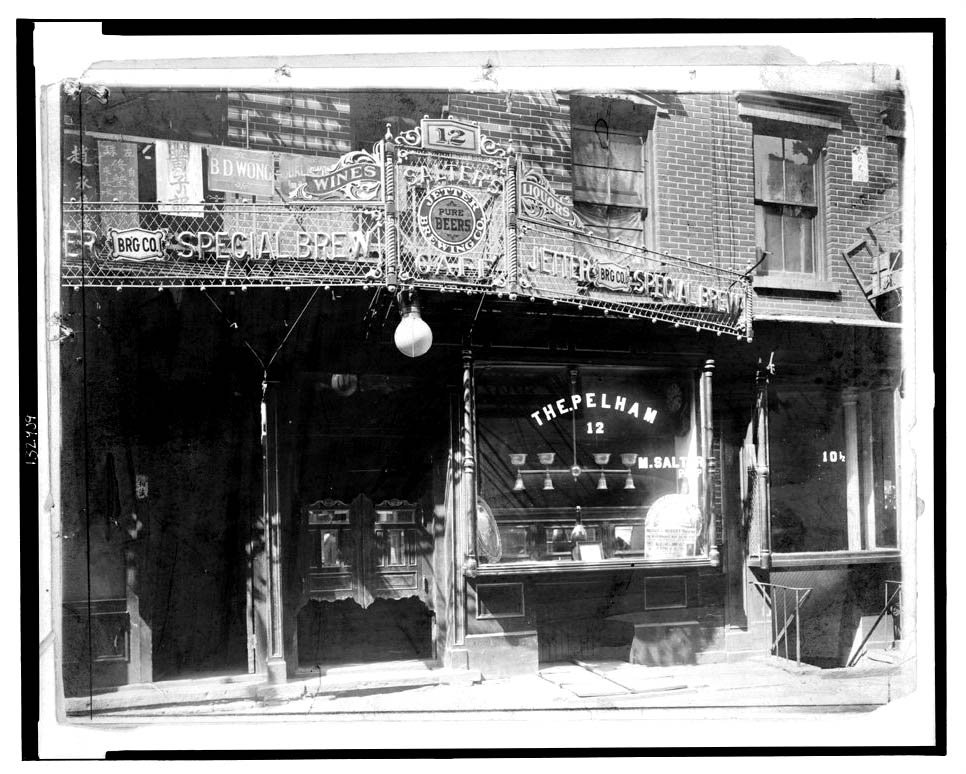
12 Pell Street today. The site was once home to Mike Salter’s election rigging gang. The ragtime piano saloon was the birthplace of the Irving Berlin.
The place was The Pelham Café, headquarters of the unbelievably politically incorrectly nicknamed Nigger Mike Salter, a Russian-Jewish gangster. The papers called Mr. Salter the uncrowned prince of Chinatown, and the prince had his hands in everything: prize-fights, dice games, opium parlors, and most of all, politics. He was rumored to have killed ten men on the road to becoming Big Tom Foley’s chief election captain, and Salter’s specialty was getting out the vote.
The House of a Hundred Entrances
False registration, ballot box stuffing, and good old fashioned repeat voting earned Salter a special place in the heart of Tammany Hall. As a reward in 1904, the Hall permitted him to open a saloon in the Chinatown vice district in a tenement known as the house of a hundred entrances located at 12 Pell Street.
Salter spared no expense decorating the joint. Ivory inlaid teak furniture filled the front room. Red burlap wallpaper, framed by gold paint, lined the walls. Sawdust covered the floors, and a dense, ever-present fog of bluish cigar smoke hung above the bar, a bar that sat the A-list of the New York sporting set.
A Den of Ragtime and Vice
Characters like Big Mike Abrams, Chuck Connors, Staten Island Sally, and Hoboken Harriet, wined, dined, and danced the night away. At the bar, Sulky, a homicidal loanshark that kept a tidy ledger, served brews to gangland’s finest. Part time pugilist and full time gangster, Jack Sirocco, and his chief gorilla, Chick Tricker, could be found there on the regular.
In the back room, the Professor, “Nick” Nicholson manned a tinpan piano while Izzy the singing waiter belted out raunchy versions of hit songs that kept Chinatown abuzz.
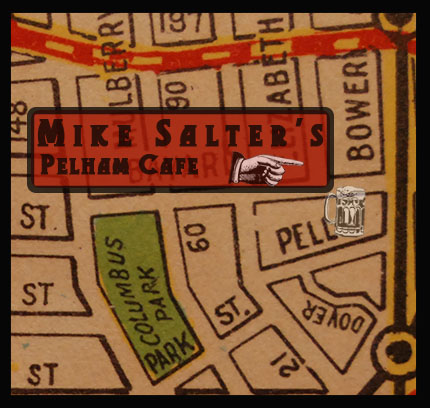
Mike Salter’s Pelham cafe was located at 12 Pell Street in the heart of the old Five Points district.
Nobility Visits The Pelham
Word spread of Izzy’s musical talents, and Chuck Connors guided legions of celebrity slummers through the saloon’s double doors. John Jacob Astor, Sir Thomas Lipton (of tea fame), and August Belmont all came to sample the hullabaloo, but nothing could top the visit by Prince Louis of Battenberg, a Rear Admiral in the British Navy and the fourteen reporters following him.
Before leaving the prince remarked to Izzy:
I have had a delightful time, not dreariness, not weariness, and not one bit lonesome.
Prince Louis of Battenberg.
When the prince attempted to tip Izzy, the singing waiter waved away the coin, exclaiming:
No, sir, it was my honor to sing.
On the Prince’s way out, Izzy and the orchestra of banjos, coronets, and fiddles stuck up a ragtime version of God Save the King.
The Making of Irving Berlin
By this point Salter knew he had something. Inspired by booze, he badgered Izzy and The Professor into writing a song because of the success of “My Mariucci Take a Steamboat”, a ditty written in a rival saloon on Doyers street.
The result of their collaboration was: “Marie from Sunny Italy.” The effort earned Izzy a whopping thirty-seven cents; but more importantly, the sheet music listed the lyricist as I. Berlin, and Irving Berlin was born.
Berlin later reminisced:
It was an important song, though, because it did get me out of Chinatown.
However, Salter’s success was short lived. In 1907, the police arrested The Prince of Chinatown on charges of false voter registration. Marshals closed down his bar, and Salter skipped bail and skidooed off to Canada for three years. Berlin wouldn’t see his boss again until 1922, when he came to pay his respects at Salter’s Funeral.




















 Infamous New York